Delay in office is rarely caused by one difficult task. They grow from small routine steps that break up the day. AI now takes over much of that routine work directly into familiar tools. Only they can decide the share that remains with the employees.
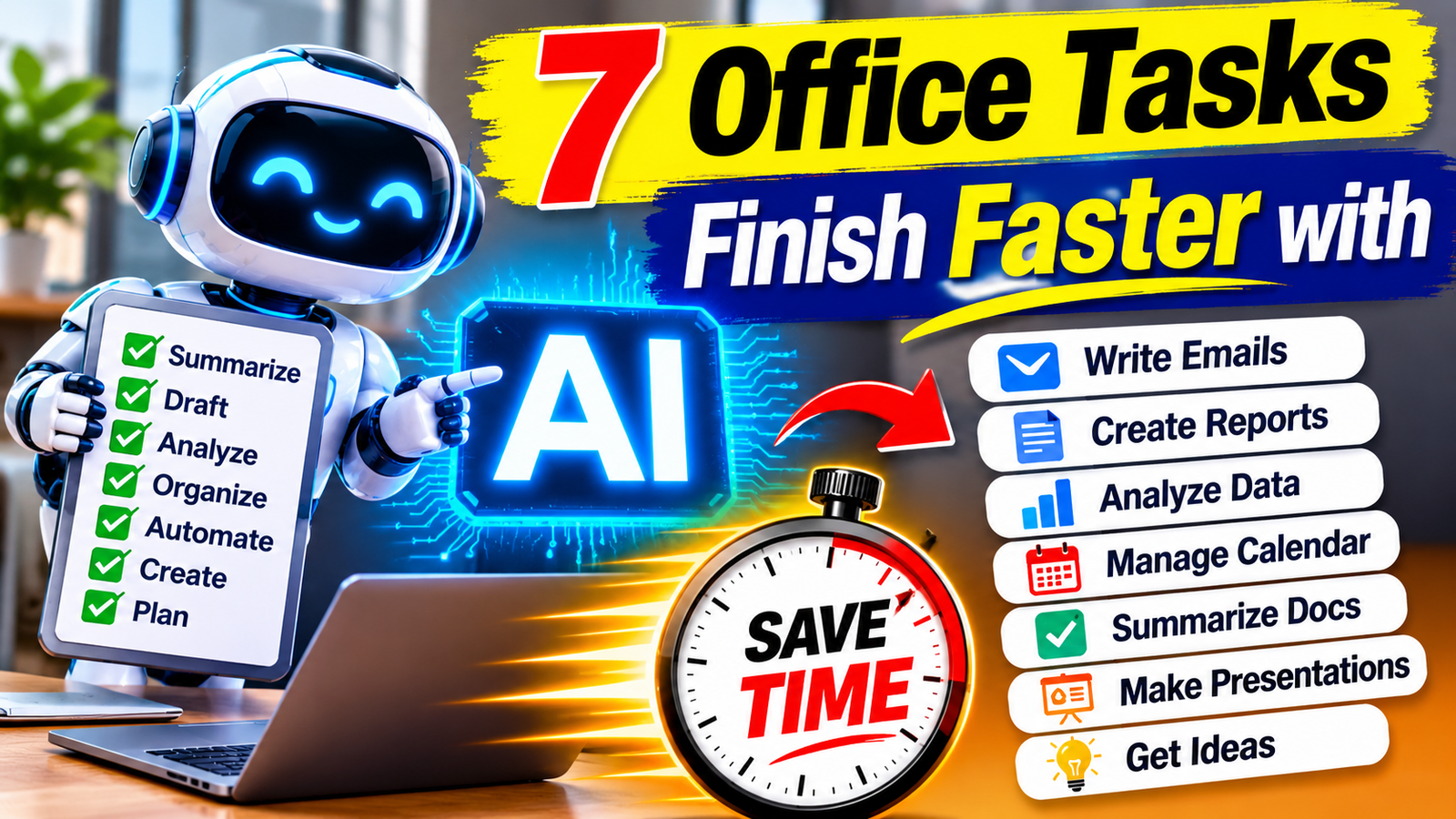
7 Office Tasks AI Can Do Faster
The biggest challenge during a workday is rarely a single, major problem; rather, it consists of dozens of small, everyday interruptions.
AI has now become integrated into the tools people already use, quietly eliminating the setup time required for routine tasks.
A shift changes the way time is spent, but not who makes the final decision at work.
In an office workday, time is rarely lost in a single, major moment. Most delays stem from small, routine tasks—such as compiling meeting notes—that disrupt the flow of work. Searching for files or waiting for reports to be written may seem like minor, inconsequential delays in the moment.
By the end of the day, however, these small delays add up. AI helps mitigate these interruptions, creating more space for decision-making, problem-solving, and the kind of work that truly demands focused attention.
A shift from large-scale software to smaller, targeted solutions
For years, office software promised greater efficiency through better templates and faster search. What has changed recently is the nature of the assistance provided. AI tools no longer merely store information.
They can draft email responses based on that information or compare schedules to suggest the optimal time for a meeting. AI-powered file search can go beyond simply listing files; it can answer questions about the content of stored documents. This marks a shift from software that helps organize work to software that quietly performs parts of the work itself.
Where does this appear first?
Office Task
AI Tool Example
What Changes
Email replies
Microsoft Copilot, Google Gemini
Drafts a reply from a few points instead of a blank screen
Scheduling meetings
Outlook, Google Calendar
Finds open slots and drafts a short agenda
Meeting notes
Otter.ai
Captures decisions and action items while the meeting runs
File search
Google Drive, Microsoft 365
Finds a document by its content, not its file name
Document summaries
AI summary tools
Pulls deadlines or findings from long files in seconds
Presentations
Canva
Turns an outline into a formatted first draft deck
Reports
Spreadsheet AI tools
Writes a plain-language account of trends from raw numbers
Generally speaking, these tools reduce the preparation time required for familiar tasks, rather than being used to initiate entirely new ones.
Is the difference greater than what meets the eye?
This benefit doesn’t come from saving a single minute on one specific task; rather, it stems from reducing the many small, recurring delays throughout the day. A meeting that concludes with a pre-prepared summary can free up time for the next task. Accessing a file in seconds—instead of waiting ten minutes—can fundamentally change how often someone chooses to consult it.
Individually, none of these things may seem dramatic, yet over the course of a week, they shift the balance of how much time is spent on planning and searching, versus actual thinking and decision-making.
It is also important to note that there are limits. While AI can draft a response, the tone still requires human oversight. AI can summarize a report, but determining why a specific figure has changed still requires someone who understands the underlying business context. These tools remove friction, but they do not remove responsibility.
Where will the office work begin from now?
The next stage of this shift may be less visible—or perhaps, less overt. AI features will cease to present themselves as distinct tools; instead, they will simply become an inherent part of how inboxes, calendars, or spreadsheets function by default. Employees might spend less time learning new software and more time deciding how to best utilize the time they have saved.
A few years from now, the office might not look any different on the surface. The real change will lie in how much of the workday is dedicated to tasks requiring human judgment, rather than the routine, granular tasks that previously occupied so much time.