AI is transforming—not replacing—careers in fields like healthcare, finance, and design. Machines handle repetitive tasks, while humans make decisions and build trust. Workers who learn to effectively leverage AI, rather than competing against it, stand to gain the most from this shift.
AI is changing what companies expect from employees—not just the tools they use.
The clearest benefit goes to those workers who learn to direct AI, rather than competing against it.
A radiologist examines an X-ray scan. An AI tool has already circled a shadow that warrants a closer look. The doctor still makes the final call—but the initial review now takes seconds instead of minutes. This subtle shift is unfolding everywhere—in offices, hospitals, and studios. AI is not replacing the expert in the room; rather, it provides that expert with a faster starting point.
For years, companies used AI as a cost-cutting tool, primarily to reduce their headcount. The pattern emerging now, however, is different. Companies that adopted AI early are not necessarily hiring fewer people; instead, they are deploying their existing workforce toward more complex and higher-value tasks.
Routine tasks are being shifted to software, while judgment, context, and trust remain the domain of humans. This shift is fundamentally transforming entire job categories from within.
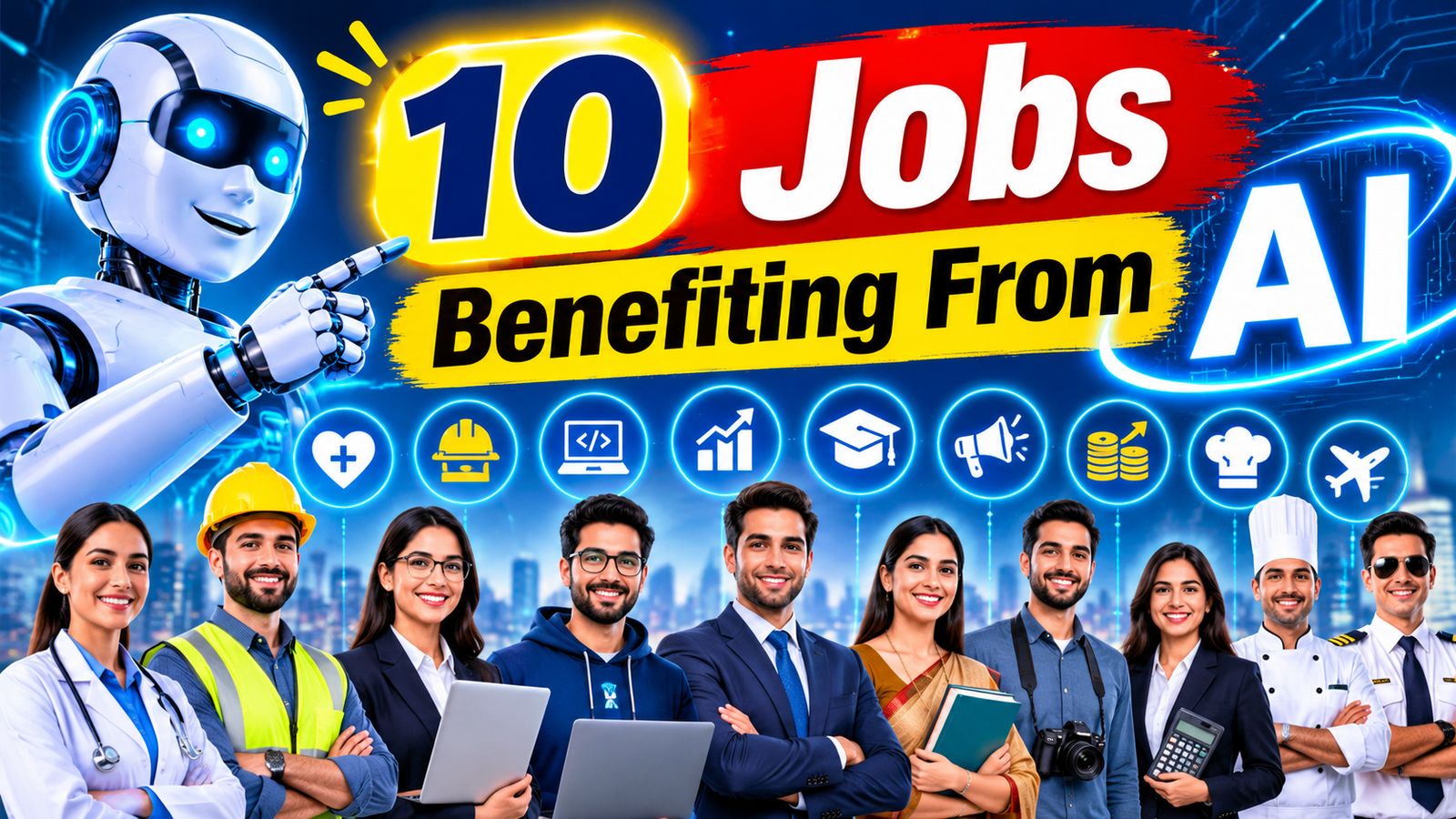
Ten Roles Where the Trade Is in the Employee’s Favor
Job
Strongest AI Advantage
Data Analysts
Faster cleanup, sharper business interpretation
Doctors and Diagnostic Specialists
Earlier flagging, faster first-pass review
Content Strategists
Quicker research, more time for original strategy
Cybersecurity Specialists
Faster threat detection, constant monitoring
Customer Experience Managers
Smoother handoff from chatbot to human agent
Teachers and Trainers
Personalized practice material per student
Legal Researchers
Faster case review, more time for argument-building
Supply Chain Planners
Early delay warnings, faster rerouting decisions
Financial Advisors
Automated calculations, more time for client trust
UX and Product Designers
Rapid mockups, more time for real user testing
Every role follows the same underlying logic, albeit with slight variations. A supply chain planner doesn’t just read AI-generated alerts about delayed shipments; they decide whether to reroute the shipment, renegotiate with the supplier, or absorb the costs themselves.
Similarly, a legal researcher doesn’t blindly accept an AI-generated case summary. They verify it, because in legal work, accuracy is far more important than speed. The tool performs the scanning, but it is the individual who determines what that scan actually means.
Why this pattern might persist
Three factors are driving these jobs toward growth rather than decline. First, AI tools still make errors that carry real-world consequences; therefore, human review is indispensable in fields like healthcare, law, and finance. Second, many AI outputs require context that machines cannot access—such as a client’s personal history or a brand’s long-standing reputation.
Third, customers and patients still prefer to interact with a human being—someone who can provide a personal touch, especially in high-stakes situations. These forces are not temporary; they are structural, and they are advantageous—provided that employees know how to direct AI, rather than merely using it.
This does not mean that every job in these fields is inherently safe. A worker who uses AI as a substitute for human judgment—rather than as a tool for speed—risks falling behind colleagues who use it more effectively. A widening gap is emerging between those who adapt and those who simply wait.
Read also: AI Career Boom: Top High-Earning Job Roles in Artificial Intelligence
What Lies Ahead for These Careers
In these ten fields, demand will increasingly shift toward specialists who possess deep professional knowledge while also being comfortable using AI tools. A content strategist who merely writes will find themselves competing against software.
Conversely, a content strategist who edits AI-generated drafts—ensuring they align with a brand’s voice and maintain originality—will stand out. The same logic applies to healthcare, law, design, and finance. While these tools are available to everyone, the skill to direct them effectively is not.
Companies are already beginning to take note of this distinction when making hiring and promotion decisions. Workers who can demonstrate that they have used AI to solve actual problems—rather than merely to generate text—are becoming easier to identify in a crowded job market.










2 thoughts on “10 Jobs Benefiting From AI”